Cost plus solution is a compliance framework for an MNE to carry out transfer pricing for services. The foundation of transfer pricing is the arm’s length principle, whereby related entities charge each other as if they were unrelated. In plain language, this means that the price of a service should be determined by the cost of providing that service plus a reasonable profit margin. The margin might be challenged by local authorities if they believe an MNE attempts to shift profits.
The framework ensures that an entity is meeting the arm’s length principle by setting a minimum profit margin that must be applied to all services provided between related entities. This ensures that the price of a service is not artificially inflated or deflated to shift profits. Most importantly, the framework has standarized settings that enable a hollistic overview of how and what is being charged.
Outcome
Since the framework has been implemented, the company has been experiencing a drastic improvment in operations. Here are the most prominent KPIs:
- Processing time reduction of 95%
- Cost savings of at least one full-time employee
- Improved stakeholder satisfaction
The framework has also enabled the company to streamline its operations, resulting in a significant increase in efficiency and productivity. The reduction in processing time has allowed the company to increase its output by 20%, while the cost savings have enabled the company to invest in new technologies and expand its operations. The reduction stems from an automated pipeline that ensures the entire process is streamlined and efficient. There is no room for human error.
This also sets the company to increase its adoption of AI; AI works best with a single source of truth type of data, which this product delivers.
Development Process
Previously the company relied on manual processing that was fragmented across the entire organization. Each team followed a sperate procedure, which created a struggle from the standardization point of view.
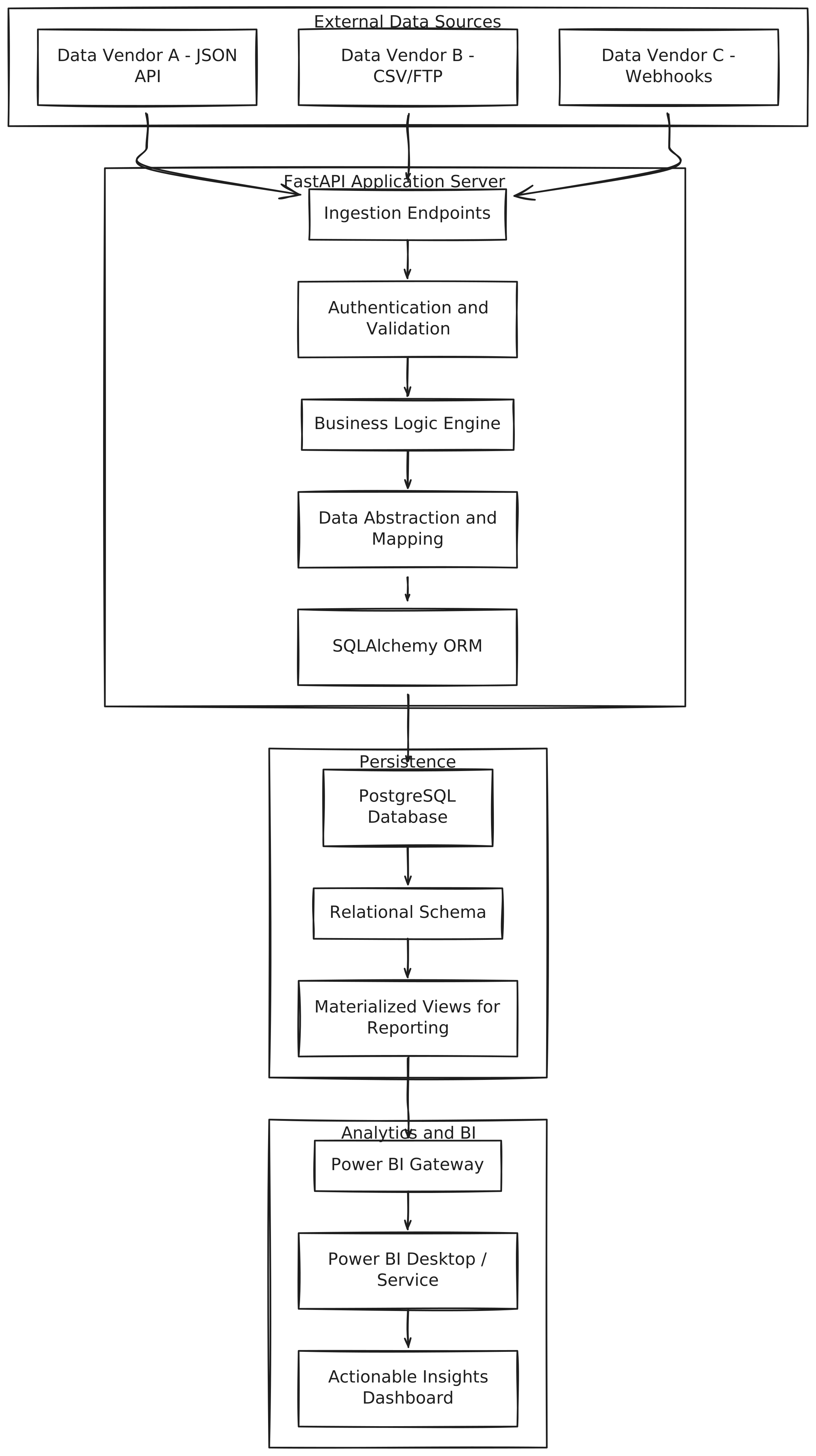
Given this, I deciced to build a framework from scratch; I begun by setting up data vendors that deliver data on demand in a standardized format. This sorts out my input requirements. Then, I moved on to setting up logic and further abstraction to ensure that the framework is scalable and maintainable.
The backend is a FastAPI service that fetches data from the vendors, subsequently starts processing in order to finally load output into a PostgreSQL instance.